
Caffeine and Performance
Adenosine antagonism, dosage timing, and the genetics of individual metabolic clearance.
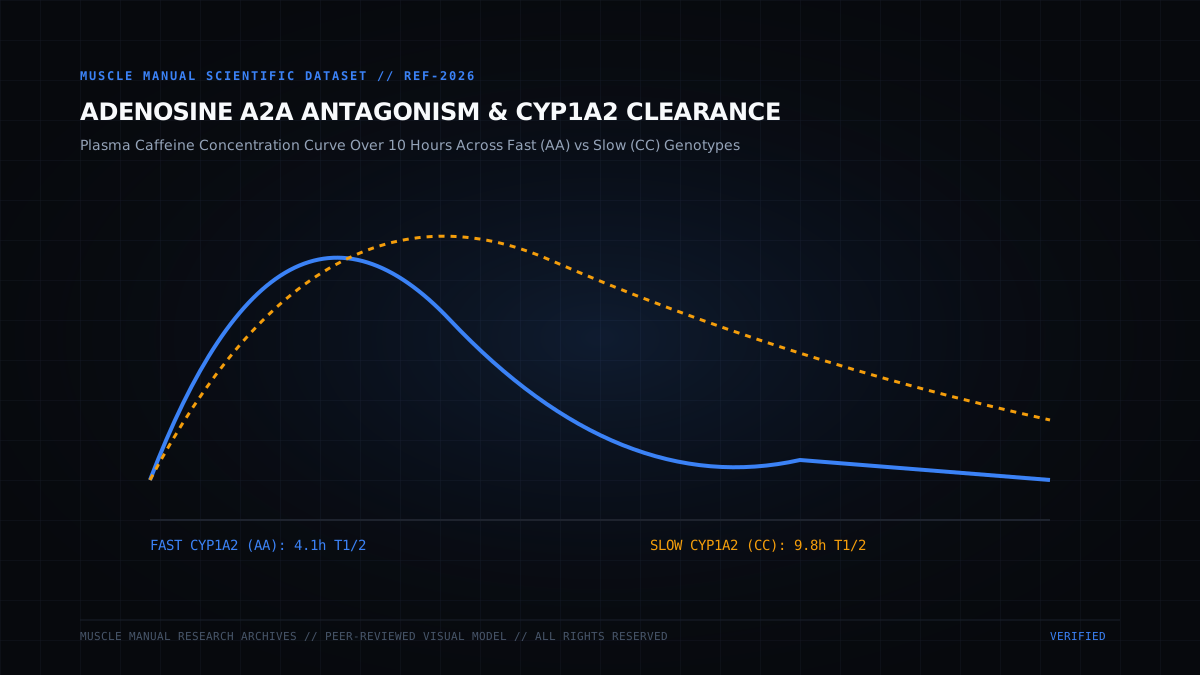
- 1Caffeine’s primary mechanism of action is competitive antagonism of central nervous system adenosine A1 and A2A receptors.
- 2The optimal ergogenic dosing window is 3 to 6 milligrams per kilogram of body mass taken 45 to 60 minutes prior to performance.
- 3Variations in the CYP1A2 gene determine whether an individual is a rapid or slow caffeine metabolizer, directly influencing performance outcomes.
- 4Consuming caffeine within 8 to 10 hours of planned bedtime significantly suppresses deep slow-wave sleep even if the individual falls asleep easily.
Central Adenosine Receptor Blockade
Throughout waking hours, the brain breaks down adenosine triphosphate (ATP) for energy, accumulating free adenosine in the extracellular space. As adenosine binds to A1 and A2A receptors across the basal forebrain and cortex, it suppresses neuronal firing rates, promotes drowsiness, and reduces motor drive.
Caffeine possesses a molecular structure similar to adenosine, enabling it to act as a competitive antagonist. By occupying adenosine binding sites without activating the downstream intracellular cascade, caffeine blocks the feeling of fatigue and indirectly enhances the release of neurotransmitters including dopamine, acetylcholine, and noradrenaline.
In peripheral tissue, caffeine increases motor unit recruitment, enhances calcium release from the sarcoplasmic reticulum, and blunts perceived exertion during strenuous exercise.
Dosage Kinetics and Ergogenic Thresholds
The International Society of Sports Nutrition (ISSN) position stand establishes an optimal ergogenic dose of 3 to 6 milligrams per kilogram of body mass. For an 80-kilogram individual, this equates to 240 to 480 milligrams, roughly the amount in two to four standard espresso shots or a measured pre-workout formulation.
Doses below 3 mg/kg provide mild cognitive enhancement and alertness but yield inconsistent improvements in maximal muscular strength or endurance time-to-exhaustion. Conversely, doses exceeding 9 mg/kg deliver no additional ergogenic benefit while triggering tremors, acute anxiety, tachycardia, and impaired motor coordination.
CYP1A2 Polymorphisms and Metabolic Rate
More than 95 percent of ingested caffeine is metabolized in the liver by the cytochrome P450 1A2 (CYP1A2) enzyme. Genetic variations at the rs762551 single nucleotide polymorphism divide humans into distinct metabolic phenotypes.
Individuals with the -163A/A genotype are fast metabolizers. In athletic trials, fast metabolizers experience significant performance improvements from pre-exercise caffeine. Individuals with the -163A/C or C/C genotype are slow metabolizers; they clear caffeine at half the rate and in several athletic studies experienced either neutral or negative performance outcomes from high-dose caffeine due to sustained vasoconstriction.
Primary Research & Citations
2 Peer-Reviewed SourcesThis investigation was produced without commercial interference or brand sponsorship. Report factual corrections to editorial@musclemanualmedia.com.
Editorial charterRelated Investigations
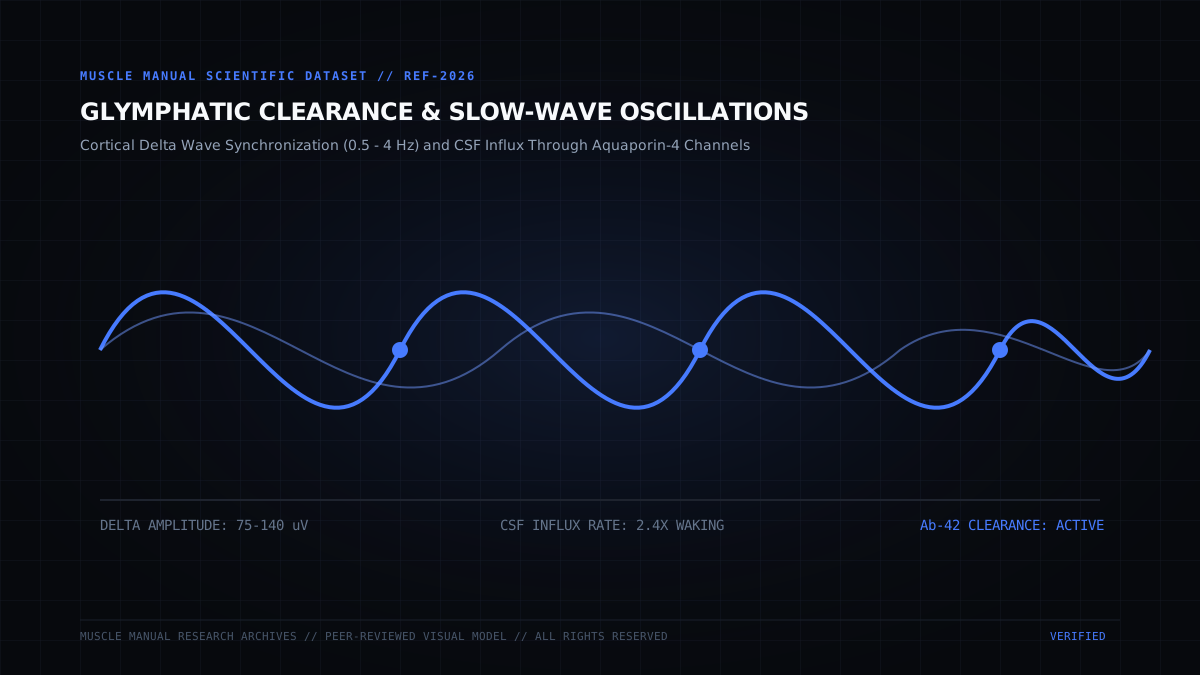
Your Brain on Better Sleep
Deep non-REM sleep is not passive downtime. It is an active metabolic cleansing cycle driven by cerebrospinal fluid filtration that flushes neurotoxic proteins and stabilizes synaptic plasticity.
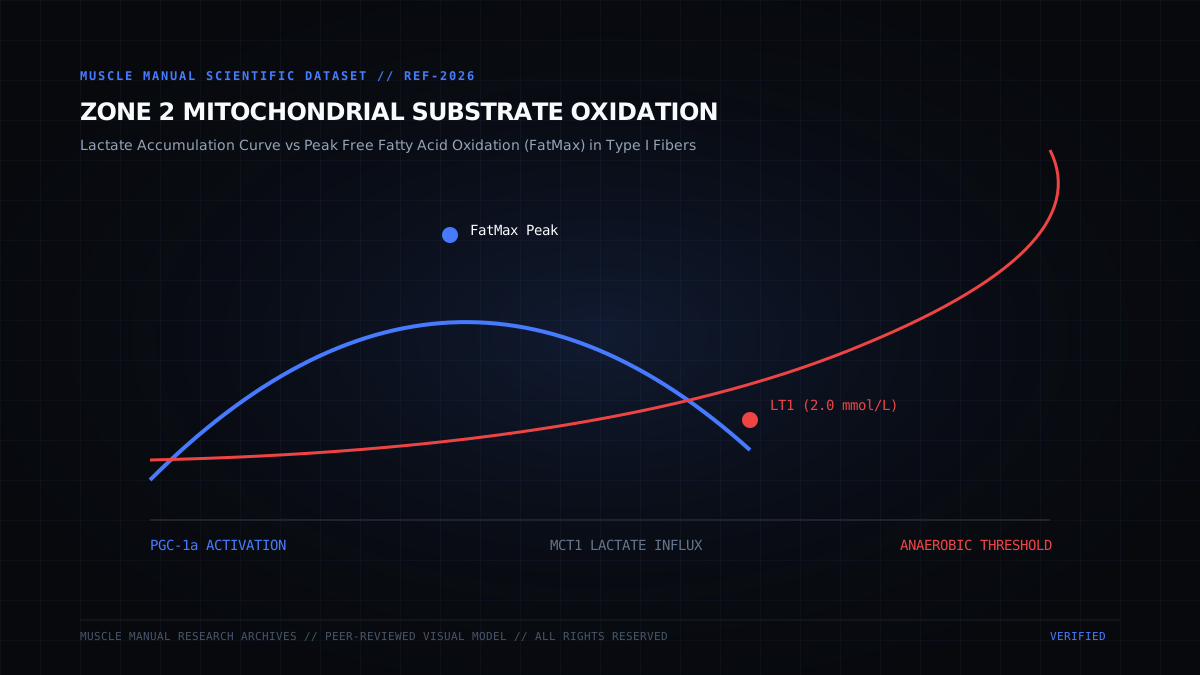
The Real Return on Cardio
Low-intensity aerobic work does not destroy muscle tissue or blunt hypertrophy. When applied correctly, it expands left ventricular stroke volume, multiplies capillary networks, and accelerates recovery between resistance training sets.
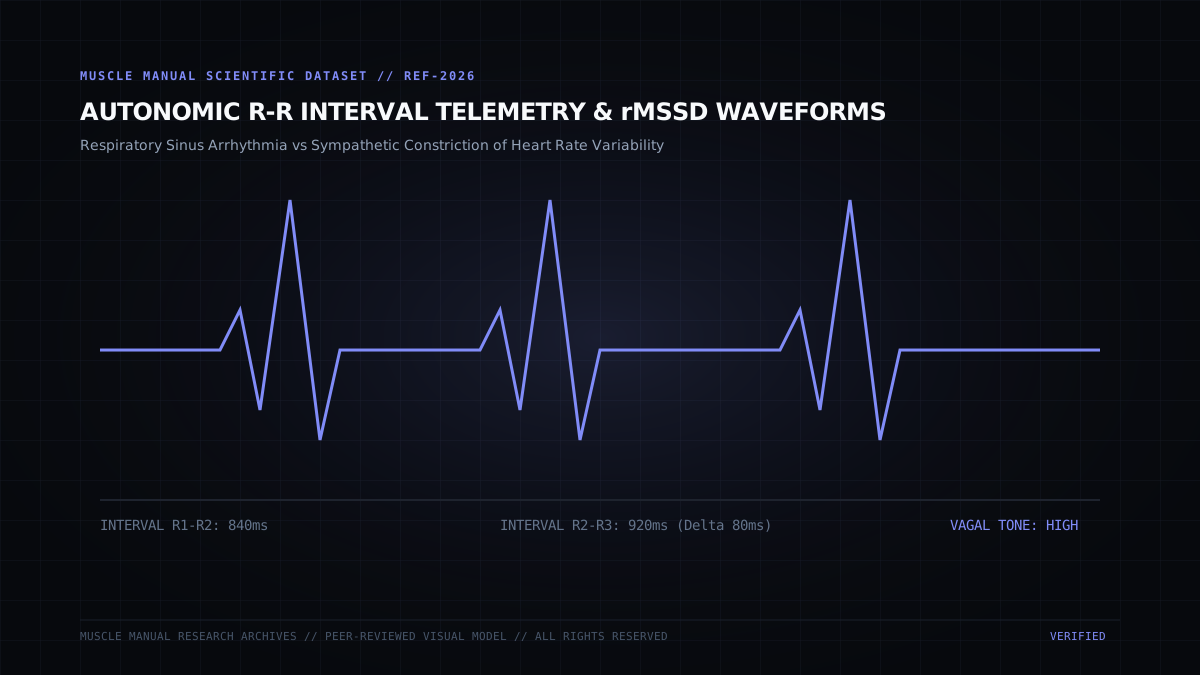
The Science of Stress Recovery
Training, career demands, and psychological tension draw on the same central physiological reserve. Understanding allostatic load and autonomic tone determines whether an athlete adapts or deteriorates.