
Training After 40
Managing tendon viscoelasticity, motor unit preservation, and systemic fatigue.
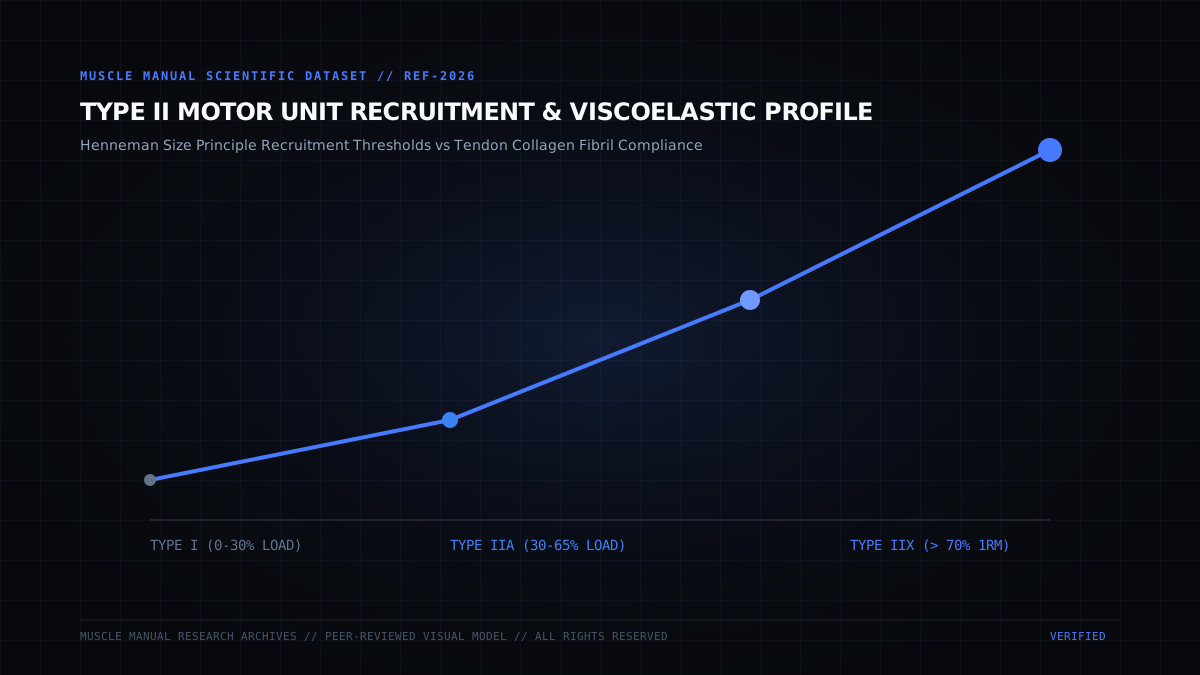
- 1Age-related muscle loss predominantly affects high-threshold Type II fast-twitch motor units; heavy resistance training is the single most effective tool to prevent this denervation.
- 2Tendon stiffness increases while collagen remodeling rates decline, requiring longer warm-up durations and controlled eccentric cadences.
- 3Joint health improves through loading within pain-free ranges of motion rather than complete exercise avoidance.
- 4Reducing per-session volume while maintaining high movement frequency optimizes weekly recovery kinetics in older lifters.
Type II Motor Unit Denervation
The primary biological driver of age-related strength decline is not a general shrinking of all muscle fibers. It is the preferential atrophy and permanent denervation of high-threshold Type II motor units. As motor neurons in the spinal cord degrade, uninnervated fast-twitch fibers either wither away or are re-innervated by slow-twitch motor neurons.
Because daily activities like walking, climbing stairs, and carrying groceries rely almost exclusively on low-threshold Type I fibers, normal lifestyle movement fails to stimulate fast-twitch units. To recruit and maintain Type II motor units, an individual must lift loads requiring high mechanical tension (typically 75 percent or more of 1RM) or execute movements with high velocity.
Abandoning heavy resistance training in mid-life accelerates the loss of rapid force production, increasing vulnerability to falls, reduced reaction speed, and metabolic decline.
Tendon Viscoelasticity and Joint Mechanics
While muscle tissue enjoys an abundant vascular supply that turns over rapidly, tendons and ligaments receive roughly one-tenth the blood flow. With age, advanced glycation end-products (AGEs) cross-link tendon collagen, reducing compliance and elasticity.
A stiffer tendon transmits force rapidly to bone, which aids sprinting efficiency in elite track athletes, but increases vulnerability to microtears and tendinopathy during sudden eccentric shocks in mature lifters. Warming up thoroughly with five to ten minutes of low-load rhythmic movement increases synovial fluid temperature, lowering fluid viscosity and improving articular cartilage lubrication.
Emphasizing controlled three-second eccentric cadences stimulates tendon collagen synthesis through mechanotransduction without requiring joint-crushing maximal loads.
Volume versus Frequency Adjustments
A common mistake among lifters over 40 is continuing the high-volume marathon workouts of their early twenties: performing 20 hard sets for a single muscle group in one afternoon. Older connective tissues and endocrine axes struggle to recover from high localized session damage.
The solution is distributing weekly training volume across higher frequencies. Instead of hitting chest once weekly with 16 sets, perform 6 sets across three separate workouts. Total weekly volume remains identical (or slightly higher), but acute intra-workout damage remains below the joint inflammation threshold, facilitating faster recovery and superior weekly movement quality.
Primary Research & Citations
2 Peer-Reviewed SourcesThis investigation was produced without commercial interference or brand sponsorship. Report factual corrections to editorial@musclemanualmedia.com.
Editorial charterRelated Investigations
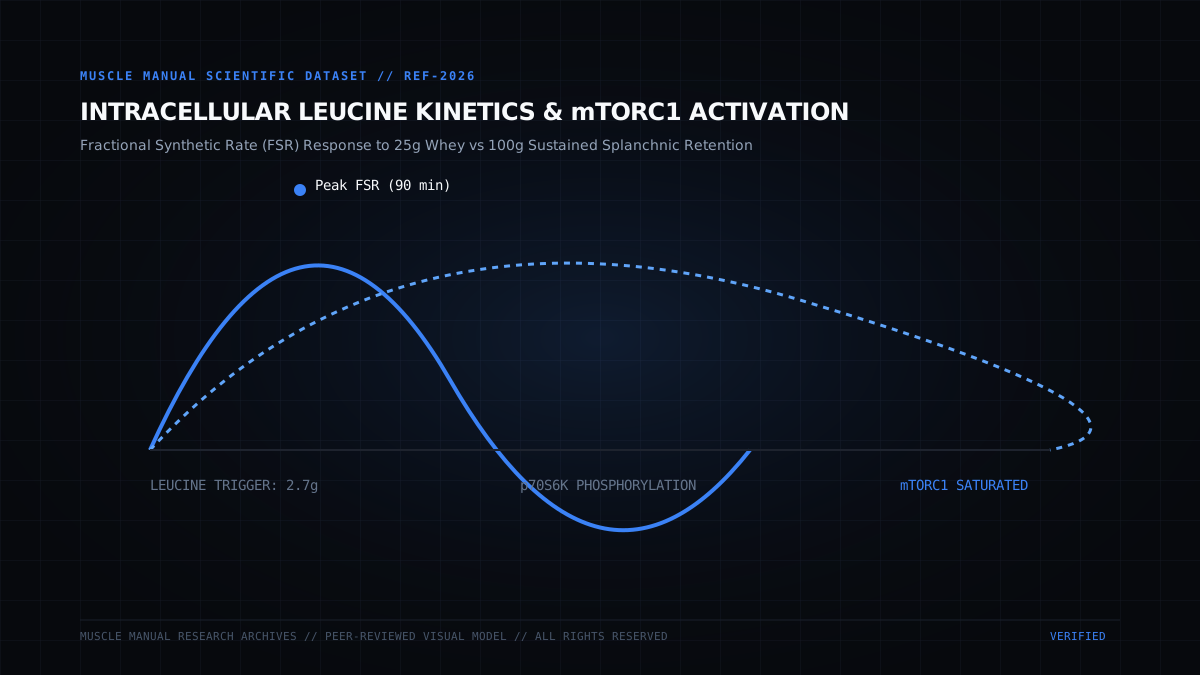
The Real Protein Question
The debate over total daily protein intake often ignores the biological kinetics of amino acid oxidation, per-meal leucine thresholds, and the difference between survival minimums and optimal tissue retention.
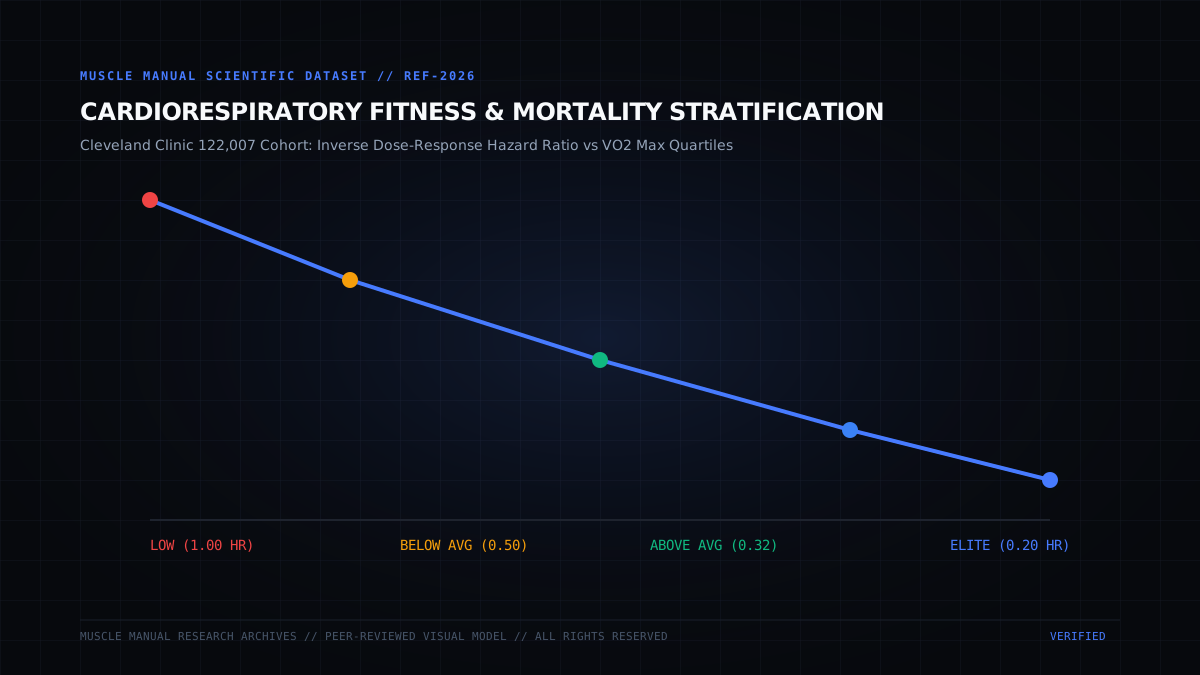
The Science of Living Longer
Modern longevity research points away from speculative pharmaceuticals and toward two measurable clinical markers: peak cardiorespiratory capacity and absolute skeletal muscle mass.
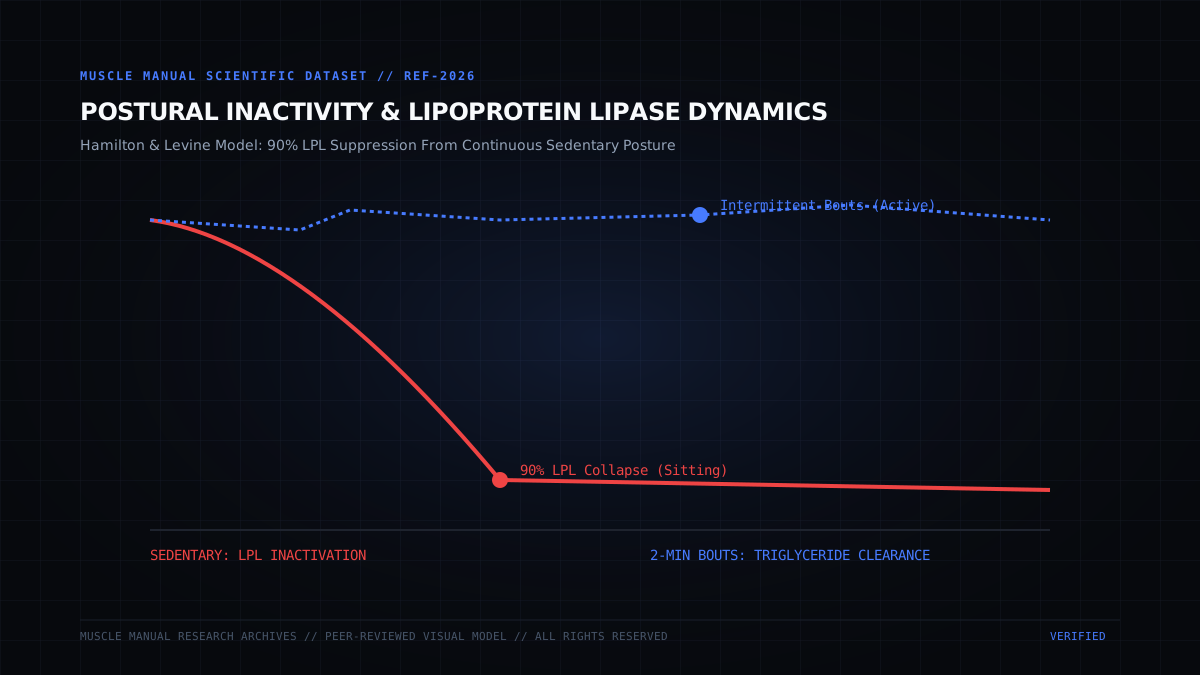
The Science of Everyday Movement
One hour in the gym cannot counteract 10 hours of stationary seated posture. Understanding non-exercise activity thermogenesis and the molecular kinetics of lipoprotein lipase changes how we view daily movement.